
Decluttering Made Easy: How to Decide What Stays and What Goes
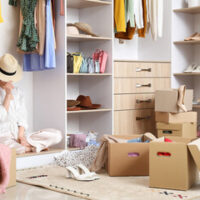
One of the biggest questions I hear as a professional home organizer is, “How do I know if I should keep this?” Whether it’s a shirt you haven’t worn in years, a kitchen gadget collecting dust, or a box of sentimental keepsakes, deciding what stays and what goes isn’t always easy.
The truth is, decluttering isn’t about getting rid of everything you own. It’s about making room for the things that truly add value to your life. Every item in your home should have a purpose, whether it’s functional, beautiful, or meaningful.
If you’ve been staring at an item wondering if it’s time to let it go, here are some questions I encourage my clients to ask themselves.
1. Have I Used It in the Last Year?
This is one of the simplest ways to evaluate an item.
If you haven’t used something in the past 12 months, there’s a good chance you don’t actually need it. While there are exceptions for seasonal decorations, heirlooms, or emergency supplies, many items remain untouched simply because we’ve forgotten about them.
Ask yourself:
- Would I even notice if this were gone?
- Have I needed it recently?
- Am I keeping it “just in case”?
If the answer is no, it may be time to let it go.
2. Does It Serve a Purpose Today?
Our lives constantly change. The things we needed five or ten years ago may no longer fit our current lifestyle.
Maybe you’ve changed careers. Perhaps your children have grown up. Maybe you’ve picked up new hobbies while leaving others behind.
Your home should reflect who you are today—not who you used to be.
If an item no longer supports your daily life, it may be taking up valuable space that could be better used.
3. Am I Keeping It Out of Guilt?
This is one of the biggest roadblocks I see.
Many people hold onto gifts they never liked because they feel guilty getting rid of them. Others keep expensive purchases simply because they spent a lot of money.
Here’s something I remind my clients often:
The money has already been spent.
Keeping an unused item won’t bring that money back. Instead, it continues to take up physical and mental space in your home.
Likewise, a gift has already served its purpose—it was given with love. You’re not obligated to keep it forever if it no longer serves you.
4. Is It Broken or Waiting to Be Fixed?
Almost everyone has a pile of items they’ve been meaning to repair.
A lamp with a broken switch.
A shirt missing a button.
A chair with a loose leg.
If you’ve been meaning to fix it for months—or even years—ask yourself honestly if you’re ever going to.
If the answer is no, it’s probably time to recycle, donate, or replace it.
5. Do I Have Duplicates?
Many homes accumulate multiples of the same item without anyone realizing it.
How many wooden spoons do you really need?
Do you own six pairs of scissors but can only find one when you need it?
Are there three can openers in your kitchen drawer?
Keeping the best version and donating the extras instantly creates more breathing room.
6. Does It Make Me Feel Good?
Every item in your home creates a reaction.
Some things make you smile.
Others simply exist.
Some actually make you feel stressed.
Pay attention to how you feel when you look at certain belongings.
If something consistently brings feelings of guilt, frustration, or overwhelm, it’s worth asking whether it deserves a place in your home.
Your environment should support your well-being—not work against it.
7. Am I Keeping It for My “Fantasy Self?”
This is a surprisingly common reason people struggle to declutter.
Maybe you own exercise equipment you never use because you’re convinced you’ll start tomorrow.
Perhaps you’ve saved dozens of craft supplies for a hobby you never began.
Or maybe your closet is full of clothes that fit the person you wish you were instead of the person you are today.
There’s nothing wrong with having goals, but your home shouldn’t become a storage unit for unrealistic expectations.
Give yourself permission to embrace the life you’re living now.
8. Would I Buy It Again Today?
This question often provides immediate clarity.
Imagine you’re standing in a store looking at the exact same item.
Would you spend your money on it today?
If the answer is no, that may be your sign that it’s no longer something you truly value.
9. Is It Easy to Replace?
Many people keep items because they’re afraid they might need them someday.
Instead, ask yourself:
- Could I borrow it?
- Could I rent it?
- Could I replace it for a reasonable price?
If replacing it would be simple and inexpensive, there’s often little reason to let it occupy valuable storage space indefinitely.
10. Is It Preventing Me From Enjoying My Home?
Ultimately, this is the most important question.
Your home should be a place where you can relax, recharge, and enjoy spending time.
If overflowing closets, crowded countertops, packed garages, or cluttered storage rooms are causing stress, it may be time to reassess what you’re keeping.
Every item you own requires space, attention, and maintenance. The fewer unnecessary possessions you have, the easier your home becomes to clean, organize, and enjoy.
Remember: Decluttering Is About Creating Space for What Matters
As a professional home organizer, I never tell clients they need to own less. Instead, I help them create homes that support the lives they want to live.
Decluttering isn’t about throwing things away. It’s about making intentional choices that reduce stress, improve functionality, and allow your home to work for you instead of against you.
If you’re unsure about an item, ask yourself one simple question:
“Is this adding value to my life today?”
If the answer is yes, give it a place in your home. If the answer is no, it may be time to let it go with gratitude.
Remember, every item you remove creates space for something even more valuable—peace of mind.
